Liquidity Sweeps: How Smart Money Hunts Stops
A liquidity sweep is when price briefly pushes beyond a key high or low to collect stop-loss orders, then reverses. Large traders need that liquidity to fill big positions, so sweeps often mark turning points — but a sweep alone is context, not an entry signal.
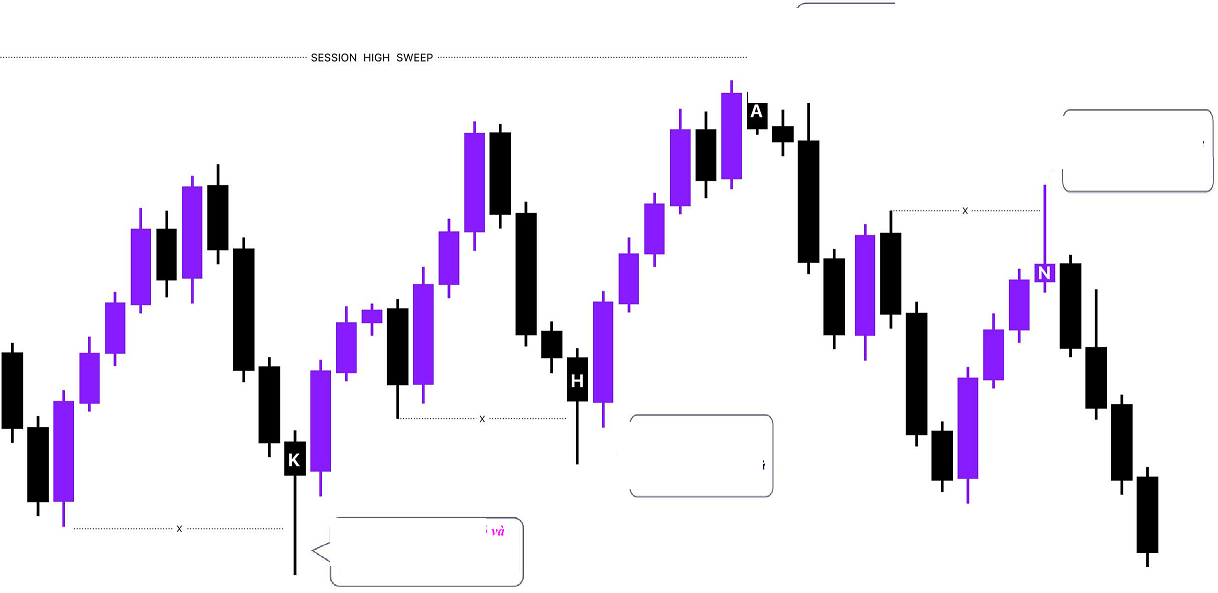
You place a textbook trade. Price drifts toward your stop, spikes one tick past it, takes you out — then reverses and runs to your original target without you. Every trader has lived this. It feels personal. It isn't. It's a liquidity sweep: one of the most readable events in price action, once you know what you're looking at.
What a sweep looks like
A sweep has a specific anatomy: price pushes beyond an obvious level — a swing high, swing low, session high/low, or a line of equal highs — usually by wick, and then closes back inside the range. The spike beyond the level is the sweep; the close back inside is what distinguishes it from a genuine break.
That distinction is everything. A break that holds beyond the level (especially on a candle close) suggests real conviction. A wick that pierces and snaps back suggests the move's purpose was never to continue — it was to transact.
Why it happens: stops are liquidity
Remember the inducement principle: large traders need counterparties. The densest clusters of orders in any market sit exactly where retail traders are taught to put them — just beyond obvious highs and lows. Breakout entries stack up above resistance; protective stops stack up below support.
A sweep harvests both at once. The push beyond the level triggers breakout orders (fresh liquidity) and stop-losses (forced liquidity). The large player fills against that flow, then price — its errand complete — returns to where it actually wants to go. Your stop wasn't hunted out of malice; it was harvested out of necessity. The market needs your order more than it needs your opinion.
Sweep vs. genuine break: telling them apart
In real time this is the hardest call in SMC, and honesty requires saying so. But there are tells:
- The close. The single most reliable filter: did the candle (or the structure timeframe's candle) close beyond the level, or just wick it? Wicks sweep; closes break.
- Displacement after. A genuine break is usually followed by displacement — a strong, fast move away from the level. A sweep is followed by... nothing much, or an immediate return. If price takes a high and then drifts sideways, be suspicious.
- What got swept. Sweeps of obvious liquidity — equal highs, session extremes, the inducement zone from the prior pullback — are higher-probability sweep candidates than breaks of obscure minor swings. The more obvious the level, the more liquidity it holds, the more motive there is to sweep it.
- Higher timeframe context. A "breakout" on the 15-minute chart that's running straight into a daily liquidity pool is more likely fuel collection than genuine continuation. Sweeps nest inside larger structure.
How traders use sweeps (as context, not signals)
A sweep by itself is not an entry signal — it's information. What it tells you: liquidity at this level has been consumed. The common professional read:
- Sweep + reclaim + structure shift. Price sweeps the low, reclaims the level, then breaks short-term structure to the upside (a CHoCH). That's the classic sweep-reversal sequence — but note it requires the confirmation after the sweep, not the sweep alone.
- Sweep into premium/discount. A sweep of the range low that lands price in deep discount is a very different proposition from a sweep in the middle of nowhere. Location filters everything.
- Failed sweep. Sometimes price sweeps and keeps going — the "sweep" was actually the start of a genuine break with a deep wick. This is why invalidation exists: no read is certain, and the sweep thesis dies if price closes and holds beyond the level with displacement.
Common mistakes
Fading every wick. Not every long wick is a sweep — high-volatility news, thin liquidity, and genuine rejections all make wicks. A sweep read needs the level (obvious liquidity), the anatomy (pierce and return), and ideally the context (premium/discount, inducement).
Entering on the sweep alone. Buying the wick as it happens is catching a falling knife with extra steps. The sweep tells you liquidity was taken; the entry comes from what price does next.
Moving stops to "avoid the hunt." Widening stops because "they're hunting me" usually just converts small planned losses into large unplanned ones. Position sizing and invalidation levels are the answer to sweeps, not stop placement superstition.
The takeaway
Once you see sweeps, you can't unsee them — and your relationship with breakouts changes permanently. The question shifts from "did it break?" to "did it break and hold, or did it just go shopping for stops?" That one reframing filters out an enormous category of false entries.
Catching every sweep by eye across multiple symbols and timeframes, though, is a full-time job of its own. The levels, the wicks, the closes — it's pattern recognition at scale.
Stop Drawing Structure by Hand
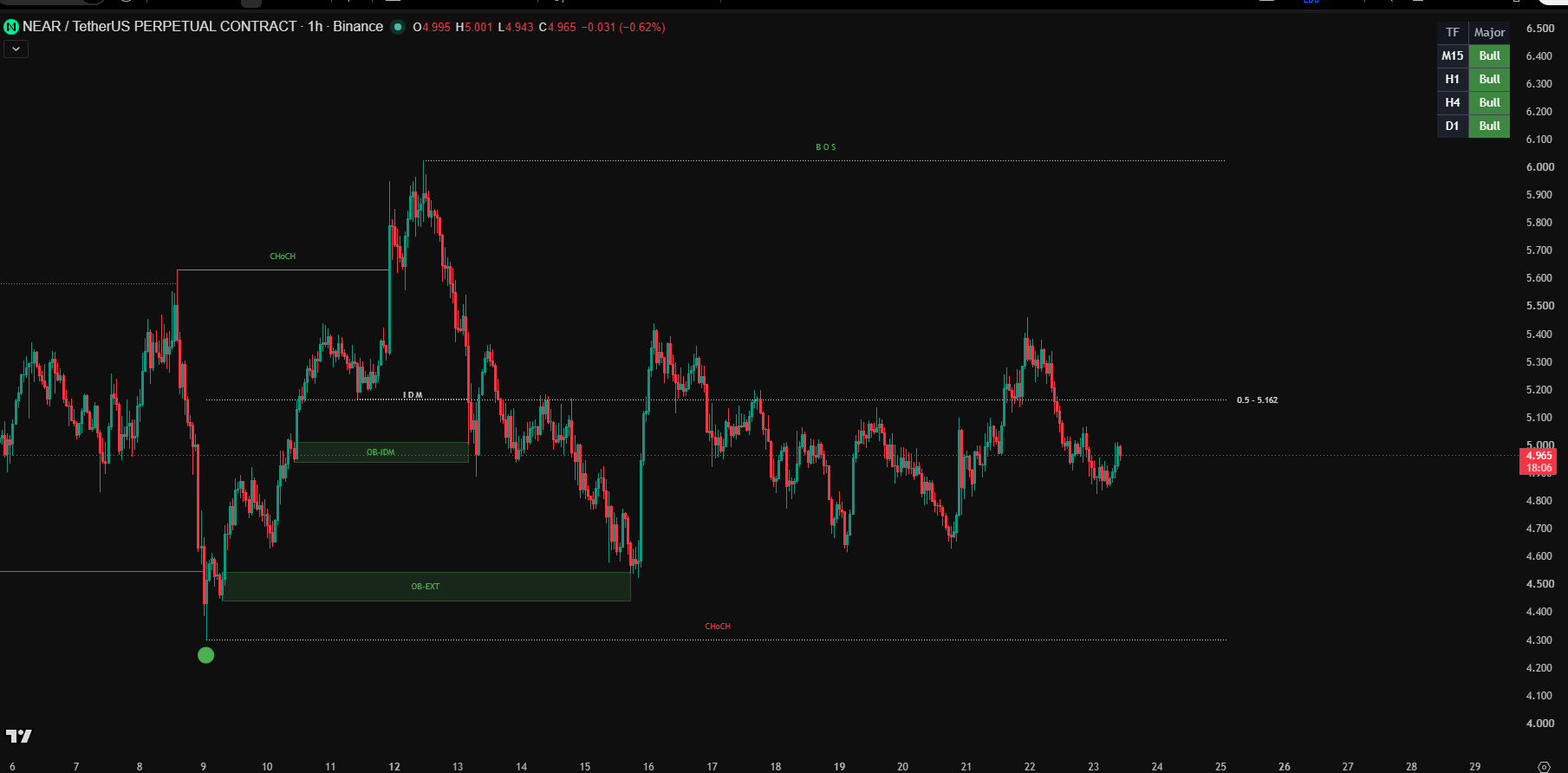
This is JUKA live on NEAR 1H — every swing, BOS, CHoCH, IDM, and the premium/discount equilibrium labeled automatically, in real time.
No missed breaks. No mislabeled noise. No hours of hand-drawing. The complete Trading Hub 3.0 source code (Pine Script v6) — yours to own forever, $99 one-time. Or $60 lifetime for invite-only access on TradingView.
Try free for 3 days — contact us on Telegram